The Last Height
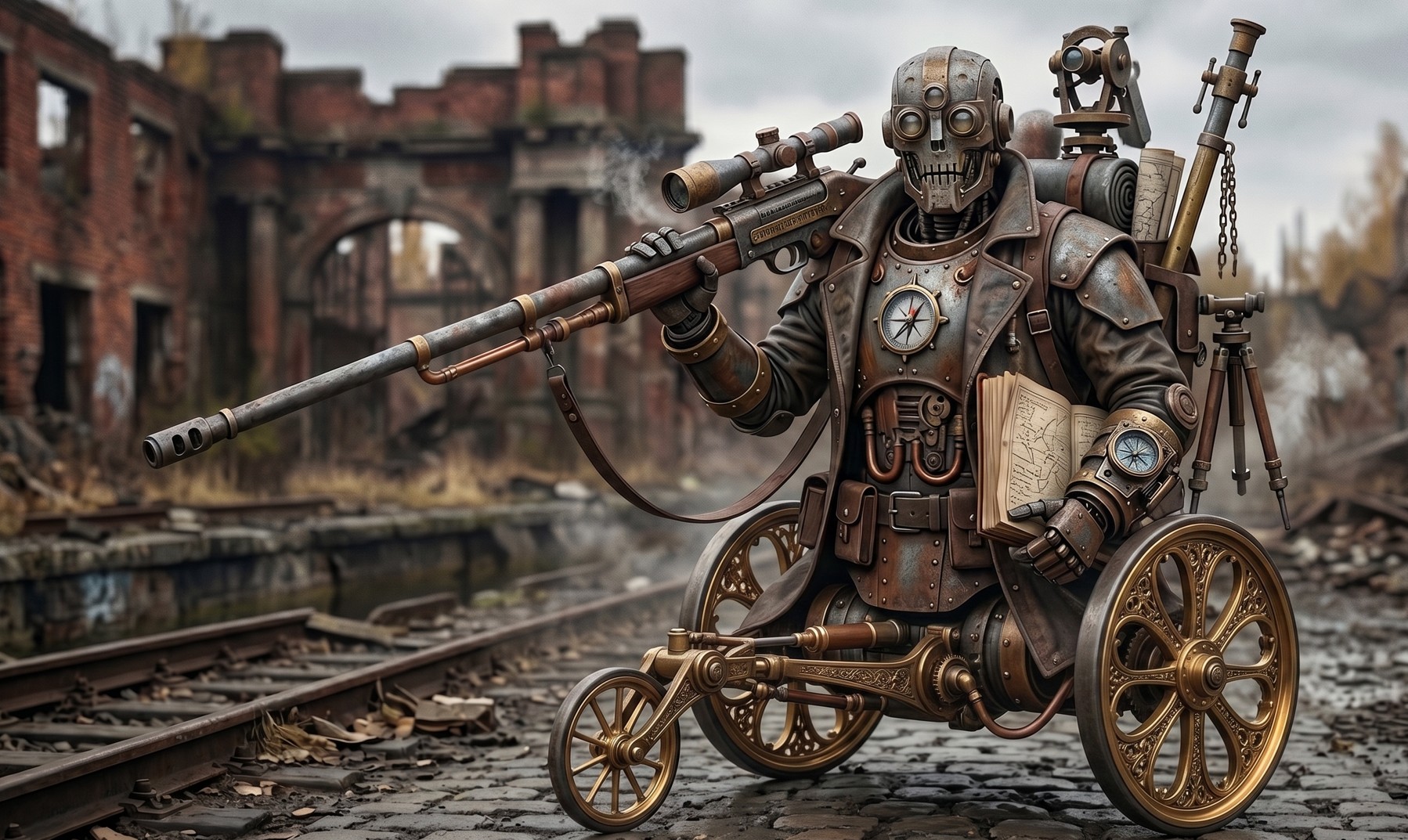
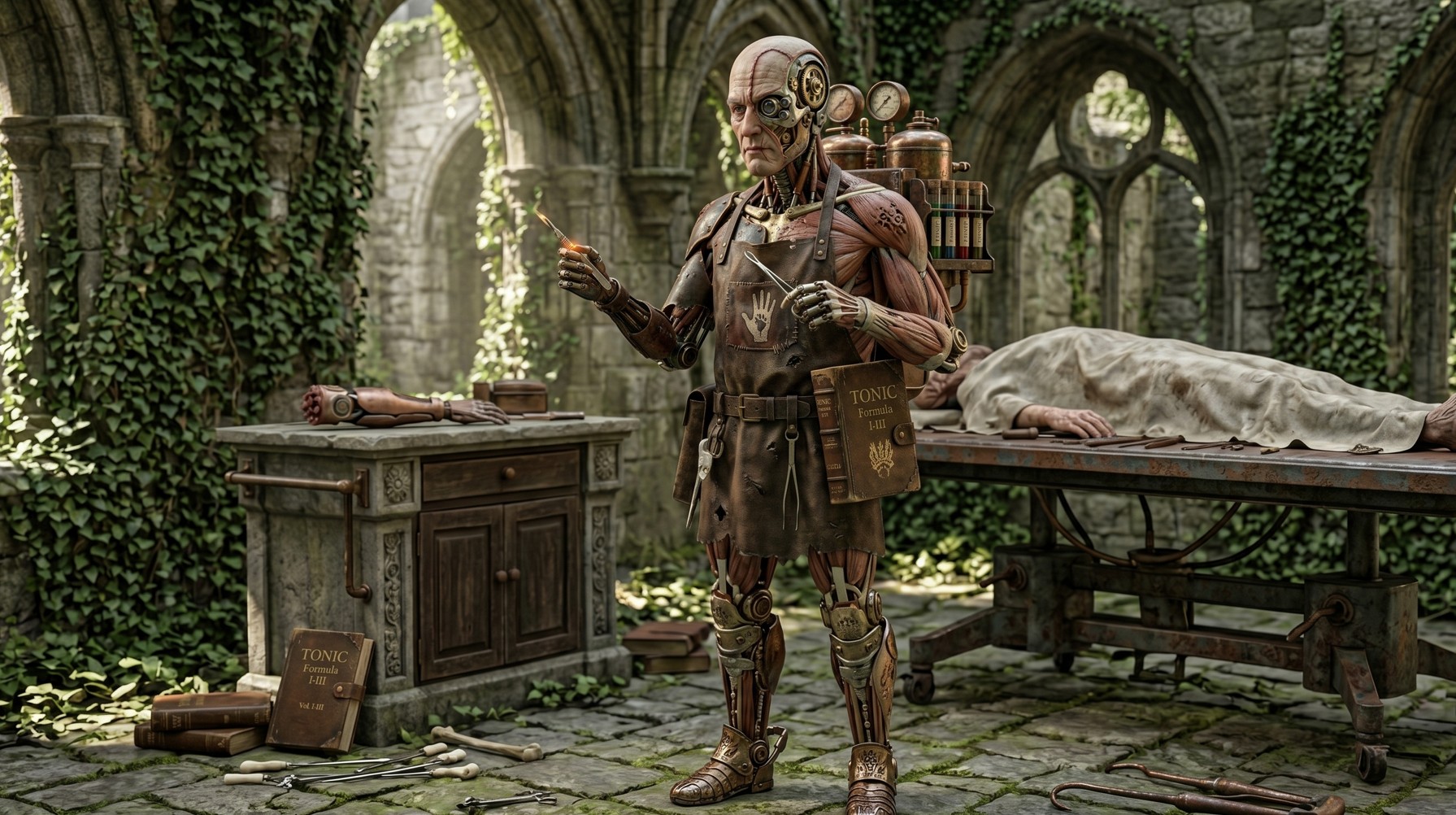
Before the fall, Tartarian reached its highest flowering not through electronics, but through analog precision. Steamworks, pressure systems, survey relays, civic stone, water engineering, clockwork logic, medicinal radium practice, archive guilds, and transport rails formed a civilization that was disciplined, beautiful, and terrifyingly capable.
Its architecture did not separate beauty from utility.
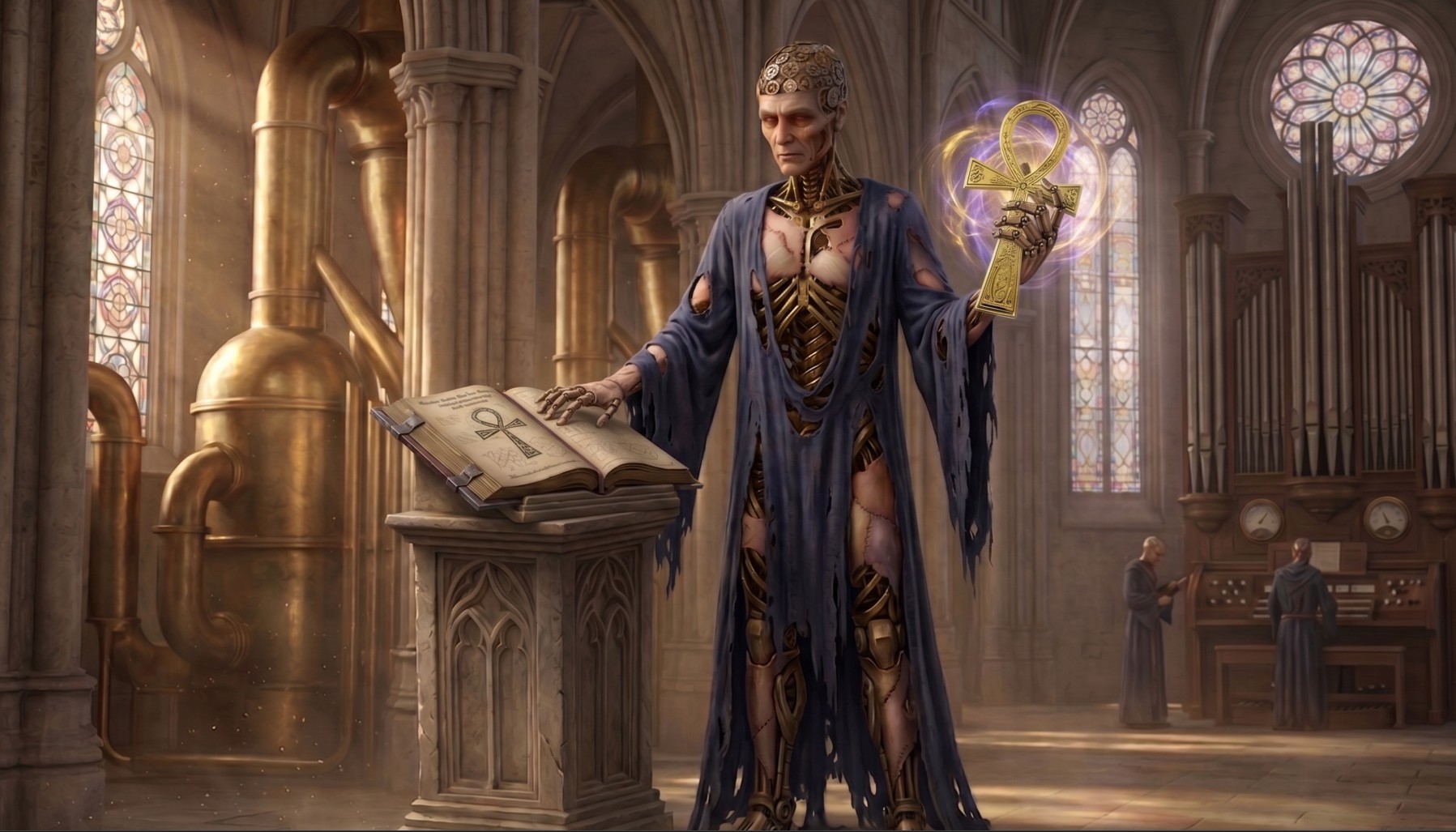
The old masters believed that structure, number, and harmony could bind society together. They built pipe organs into civic halls not for ceremony but for resonance. They cut rose windows to precise sacred ratios. Their rail lines followed survey geometries that doubled as territorial mathematics. Giants walked among them — or what could only be giants, given the scale of the stonework that survives. The trees they planted still stand, impossibly large, impossibly old, outlasting every institution that tended them.
Perhaps the old masters were right to believe that harmony was the foundation. Perhaps that is precisely why the world had to be broken.
The Mud Flood
No one agrees on the Mud Flood. That disagreement is, itself, a form of evidence.
What every witness agrees on: the flood buried basements as ground floors, turned halls into foundations, left processional roads half-submerged, opened underworks where streets once stood, and tore memory so completely that even survivors began inheriting false histories. The forgetting was thorough. The evidence that survived is precise enough to be either random or deliberate, and no one can determine which.
The Broken Inheritance
The people of Tartarian live among fragments of institutions. Guild halls with no guilds. Watchtowers with no empire. Relay dais platforms with no official signal service. Ruined workshops still stocked with impossible fittings. Civic plazas reclaimed as camps. Cathedrals cut open to the sky. Underworks that feel less like caves than like buried infrastructure.
This is why trade, salvage, books, instruments, ledgers, and relics matter so much. In Tartarian, knowledge is not flavor. It is currency, leverage, and often survival.
The Three Great Alignments
Tartarian works best when its living politics come in threes. Below are the three broad public alignments of the rebuilding age, and the silent fourth that no one can quite classify.
Best for: planners, builders, governance-oriented operators, and those who want the world to look like what it used to be.
Best for: aggressive operators, extraction specialists, raiders, and those who understand that the old world did not fall by accident.
Best for: diplomats, traders, information agents, and those who understand that the most powerful position is often the one nobody is watching.
Overworld, Underworld & Outerworld
- Safer trade and access to established vendors
- Full building rights across zone boundaries
- Better civic reliability and social standing
- Visible legitimacy with the Brass Concord
- Standardized market for rare Outerworld salvage
- Active stat increase (+0.05) while operating below
- Build-site binding lets more players share fewer structures
- Deeper ore, harder salvage, richer extraction zones
- Native advantage in all underworks combat
- Higher vendor costs and outsider treatment above ground
- Higher salvage density — rare and exceptional grades more common
- Sparse basic resources — wood, iron, and radium present but uncomfortable
- Every second tile has build sites; the rest are fully desolate
- Three frontier bind stones at Far West, North Edge, Far East
- Three cave entrances to the Underworld (inverted triangle geometry)
- Creates the third corner of the trade triangle
Overworld Zones — The Known 3×3
Cave Zones
The Forgotten Margin
The Outerworld is not a separate place so much as a continuation of the surface in a direction the recovering world stopped mapping. The 3×3 known Overworld sits at the center of a 7×7 surface travel plane. Surrounding it — two rings deep, forty tiles in total — is the Outerworld: the forgotten margin where the old civilization built its most remote infrastructure and where the Mud Flood was, apparently, least thorough about burying it.
Every outerworld tile shares a single generated profile. No one has named them individually. The Surveyor lodges use directional coordinates. Everyone else just says "far out" and points.
Settlements & Camps
Every city in Tartarian's recorded history began as a decision by one person to stop moving and build something. That progression — tent to lodge to hall to outpost to town to city to the rare Great Metropolis — is not metaphorical. It is a literal sequence of construction, investment, and defended persistence. The world does not award settlement status. It recognizes what already exists and cannot be ignored.
The full seven-tier progression — from Field Tent to Great Metropolis — is documented in the Craft & Build section of this Codex, along with binding capacity, station unlocks, and the economic loop that connects extraction to auction to civic growth.
The Brass Trees
The impossibly large trees — the ones predating the Flood, outlasting every institution that ever tended them — have been examined closely by scholars curious enough to request samples and guild-connected enough to get them processed.
The bark has metallic properties. Not figuratively. Small shavings, when placed in proximity to a weak electrical source of the kind Gearwright lodges routinely use for instrument calibration, conduct a mild response. This is not botanically possible. Wood does not conduct. The samples are not contaminated — the metallic response is distributed through the bark structure itself, not deposited on the surface.
This finding has been reported formally four times in the post-Flood record. In three of those cases, the reporting scholar subsequently revised their findings — in two cases very shortly after a guild review, in one case without any review at all, which is in some ways more notable. The fourth report remains in the archive unrevised, filed by a scholar who retired from formal guild work the following season and has not published since.
Folk who live near the great trees have names for the phenomenon. They call the conducting bark cold brass or deep grain and consider it a mark of an old-growth tree rather than a young one. They do not find it alarming. They find it ordinary. This is, to the scholars who are still looking, the most interesting data point of all.
Consensus Geography
In the first two generations after the Mud Flood, when serious mapmaking resumed, surveyors encountered a specific practical problem that took decades to resolve and was never, strictly speaking, explained: the same road measured differently on different surveys. Not by much. A few yards here, a hundred yards in certain regions, occasionally more. But consistently, and — strangest of all — consistently in the same direction for each survey team's separate work.
It was not instrument error. The teams checked. It was not calculation error. The math held internally. The measurements simply did not agree with each other, and in certain zones — notably near what are now identified as active ley junctions and major node sites — the disagreement was large enough to matter for construction and route-planning.
The solution, after several decades of heated guild correspondence, was Consensus Geography: a standardized correction framework that adjusts all regional measurements to agree with an accepted baseline established at six anchor points distributed across the mapped world. Maps now agree with each other. The system works for practical purposes. Roads can be built. Caravans can navigate. Distances are reliable within stated tolerances.
Whether the maps agree with the underlying terrain — particularly near active ley junctions, where the original measurement anomalies were largest — remains an open technical question that the Consensus Framework was, in effect, designed to stop people from asking.
Proportions
The old stonework is not merely large. It is proportioned.
This is a precise distinction. A stone that is twice as large as needed is waste. A stone cut to fit a different stride length, a different door clearance, a different stair riser height, a different column reach — that is design. The architecture of the pre-Flood world is full of design decisions that assume a body somewhat taller, somewhat longer in the limb, and somewhat heavier in the frame than any human in the post-Flood record.
Some scholars attribute this to the Old Masters having different physiology than the current population — an interesting conclusion that raises the immediate question of where they went and why they left no direct descendants in the surviving record. Others argue the architecture was simply built to impress, with proportions deliberately exceeding human scale for psychological effect, as large civic monuments often are.
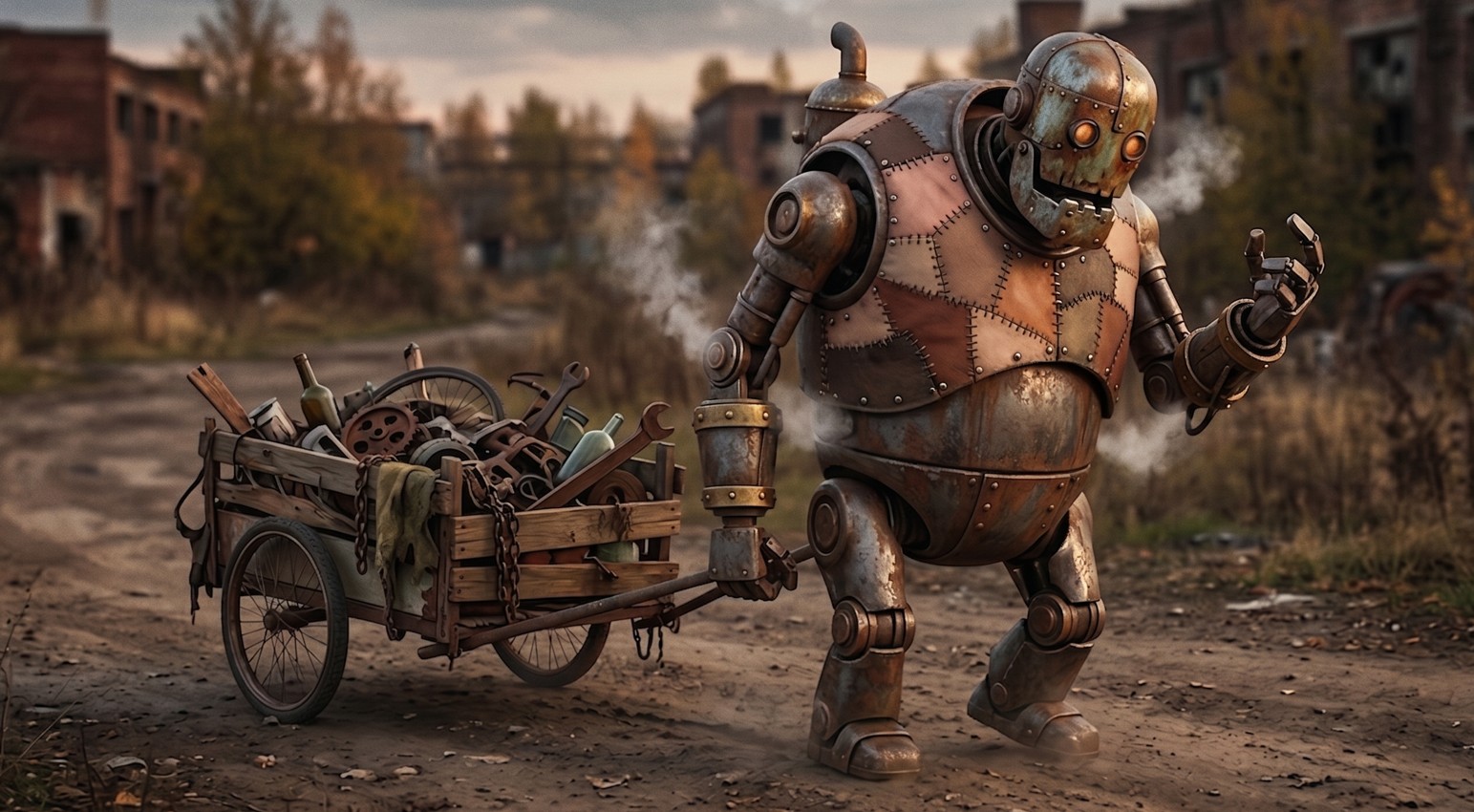
The automaton evidence complicates both readings. Several deep underwork recovery expeditions have documented automaton chassis — pre-Flood manufacture, not post-Flood reconstruction — at scales inconsistent with any known human or standard automaton frame. Not dramatically larger. Perhaps fifteen to twenty percent, in most documented cases. But consistently. In the same direction. In structures that were clearly designed for their use, not merely capable of accommodating them.
The theory that the old masters built to serve a larger population, rather than being that population themselves, is considered impolite in academic settings. That is usually a sign that it has evidence behind it that the field has not yet decided how to process.